Christchurch Passive Fire Compliance
Service Penetrations
& Fire Stopping Systems
Understanding service penetrations, fire stopping systems and fire compartmentation throughout buildings across Christchurch and Canterbury.
What Are Service Penetrations?
Openings Through Fire-Rated Barriers
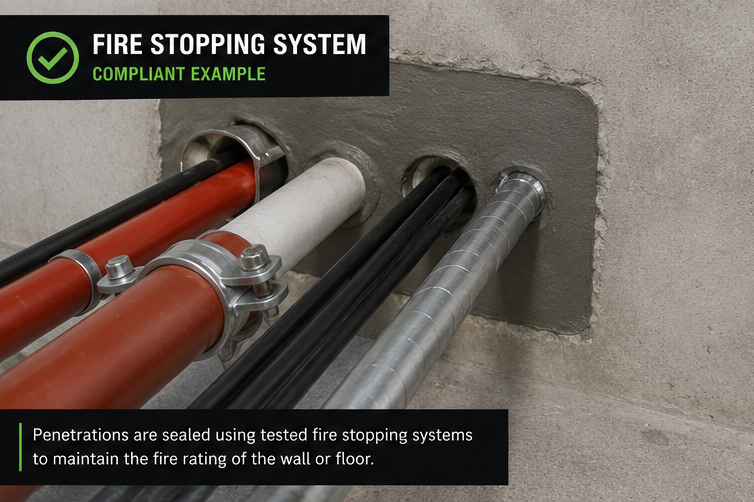
Service penetrations are openings created when pipes, cables, ducts or other services pass through fire-rated walls or floors.
These openings must be protected using tested fire stopping systems designed to maintain the fire resistance performance of the barrier.
Throughout Christchurch and Canterbury, penetration defects are commonly identified during BWOF inspections, fitouts, remediation projects and existing building reviews.
Common Penetration Types
Typical Services Found In Buildings
Plastic Pipes
Plastic pipes can melt during fire exposure and require tested fire stopping systems such as fire collars or wraps.
Metal Pipes
Metal service penetrations require tested sealing systems to maintain fire compartmentation performance.
Electrical Cables
Cable penetrations passing through fire-rated barriers require compliant fire stopping protection.
Cable Trays
Large cable tray openings can create significant compartmentation risks if left unprotected.
HVAC Ducts
Mechanical duct penetrations often require fire dampers and tested fire-rated sealing systems.
Mixed Services
Openings containing multiple services require carefully selected tested systems to maintain fire ratings.
Why Fire Stopping Matters
Maintaining Fire Compartmentation
Fire compartmentation systems are designed to slow the spread of fire and smoke throughout buildings.
Unprotected penetrations can create direct pathways for smoke, heat and fire to spread between fire compartments.
Properly selected tested systems help maintain the fire resistance performance of walls and floors.
Common Defects
Typical Penetration Issues
Common passive fire defects include: unsealed openings, incorrect products, damaged seals, foam fillers, oversized openings and untested systems.
Service upgrades and tenant fitouts frequently create new penetrations that may not be properly protected.
These issues are commonly identified during inspections throughout existing buildings across Christchurch and Canterbury.
Inspection & Reporting
Structured Compliance Workflows
Penetration inspections commonly include: photographs, defect identification, fire stopping observations, penetration schedules and compliance reporting.
BAKKER PFI LTD uses structured inspection workflows and Codexus digital systems to support passive fire visibility throughout buildings.
These workflows help support BWOF compliance, remediation planning and ongoing passive fire management throughout Christchurch and Canterbury.
Codexus Compliance Systems
Digital Penetration & Compliance Management
Codexus helps organise penetration records, defect registers, inspection data and passive fire reporting workflows.
The platform is powered by real-world installation and inspection knowledge provided by BAKKER PFI LTD.
Continue Learning
Explore More Passive Fire Topics
Continue learning about fire compartmentation, fire doors, inspections and passive fire compliance workflows.