
Christchurch Passive Fire Learning
Fire Compartmentation
& Fire Separations
Understanding how fire compartments and fire-rated separations help slow the spread of fire and smoke throughout buildings.
What Is Fire Compartmentation?
Dividing Buildings Into Fire Compartments
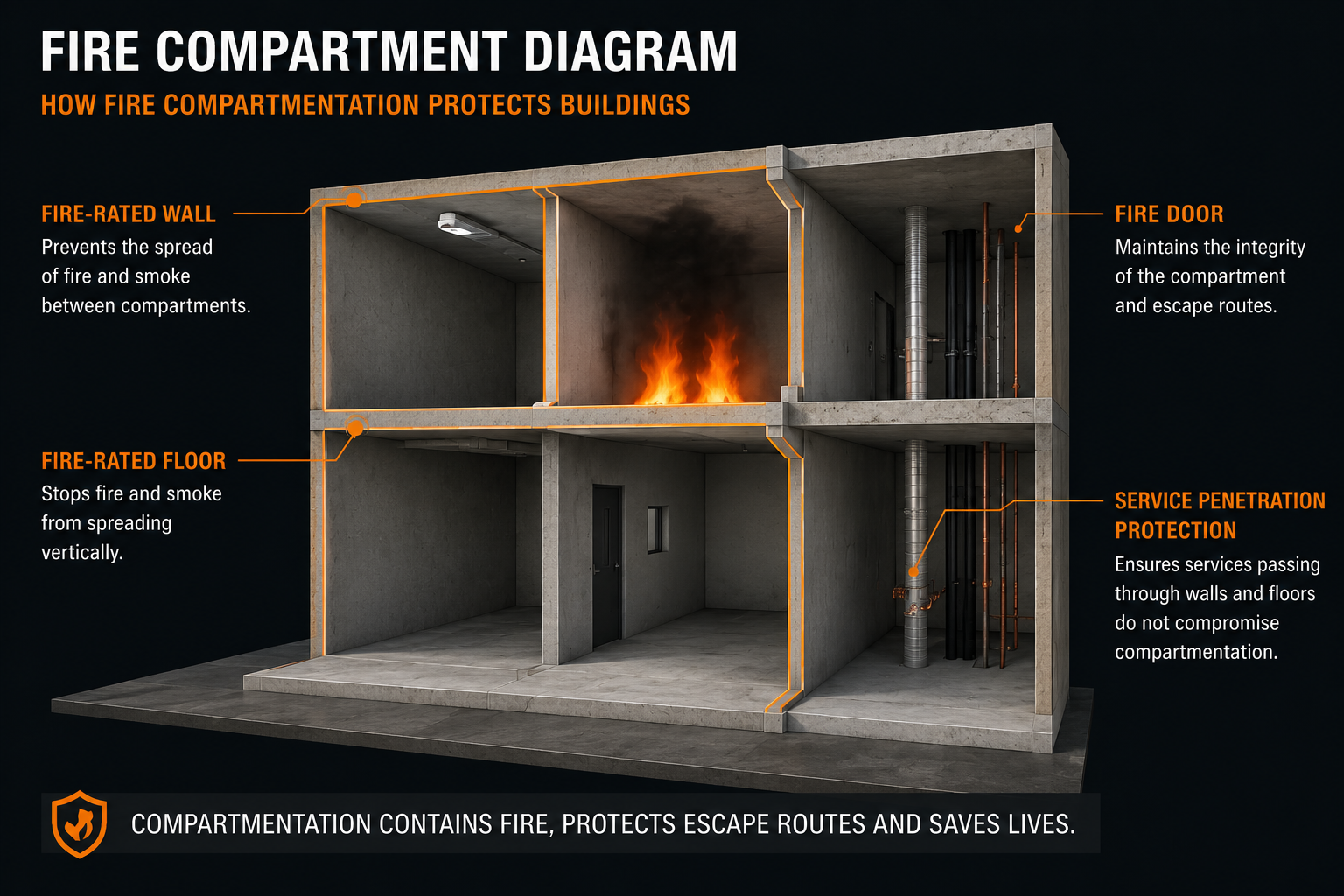
Fire compartmentation is a passive fire protection strategy designed to divide buildings into separate fire compartments.
These compartments help slow the spread of fire and smoke throughout a building, protecting occupants, escape routes and property.
Fire-rated walls, floors, doors and fire stopping systems all work together to maintain compartmentation performance.
Compartmentation Systems
Common Fire Separation Elements
Fire-Rated Walls
Fire-rated walls help divide buildings into separate fire compartments designed to slow the spread of fire and smoke.
Fire-Rated Floors
Fire-rated floor systems help prevent vertical fire spread between levels within buildings.
Fire Doors
Fire doors form part of the compartmentation system protecting escape routes and separated spaces.
Service Penetrations
Openings created by services passing through fire-rated barriers must be protected using tested systems.
Ceiling Barriers
Ceiling spaces and concealed voids may require fire barriers to maintain compartmentation performance.
Risers & Shafts
Vertical risers and service shafts require fire separation systems to reduce fire spread throughout buildings.
Why Compartmentation Matters
Slowing The Spread Of Fire & Smoke
Compartmentation systems are designed to help contain fire and smoke within a limited area for a specified period of time.
This helps improve evacuation conditions, protects escape routes and supports firefighting operations.
Compromised fire separations can allow fire and smoke to spread rapidly throughout buildings.
Common Compartmentation Issues
Defects Identified During Inspections
Common compartmentation defects include: unsealed penetrations, damaged fire-rated linings, missing barriers, defective fire doors and unprotected ceiling voids.
Tenant fitouts, service upgrades and renovation works often create new openings within fire-rated barriers.
These issues are frequently identified during BWOF reviews, remediation projects and existing building inspections throughout Christchurch and Canterbury.
Inspection & Reporting
Structured Passive Fire Compliance Workflows
Passive fire inspections commonly include review of fire separations, service penetrations, fire doors and compartmentation systems throughout buildings.
Inspection findings may be documented using photographs, defect registers, floor plans and compliance reporting systems.
BAKKER PFI LTD uses structured inspection workflows and Codexus digital systems to support passive fire visibility and compliance management throughout Christchurch and Canterbury.
Codexus Compliance Systems
Digital Fire Compartmentation Workflows
Codexus helps organise passive fire inspection records, compartmentation observations, defect registers and compliance workflows.
The platform is powered by real-world installation and inspection knowledge provided by BAKKER PFI LTD.
Continue Learning
Explore More Passive Fire Topics
Continue learning about fire doors, service penetrations, inspections and passive fire compliance workflows.